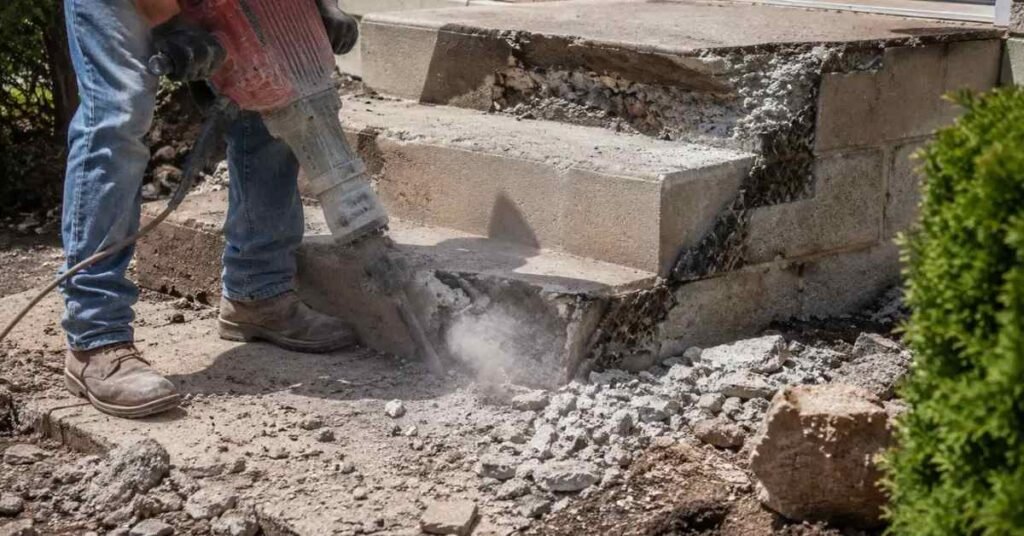
Removing concrete stairs is more than breaking up a heavy structure. Poorly planned demolition can damage nearby walls, walkways, landscaping, drainage systems, or other parts of your property. A controlled approach helps reduce these risks and makes cleanup easier.
For homeowners in Santa Fe and nearby communities, the safest option is to assess the stairs before any concrete is broken. Mouton Concrete Services handles concrete demolition and removal with an emphasis on careful planning, specialized equipment, debris removal, and a clean surface afterward.
What Should You Check Before Removing Concrete Stairs?
Before removing concrete stairs, inspect how they connect to the surrounding property. Stairs may be attached to a porch, foundation, retaining wall, landing, or walkway. They may also sit close to utility lines, drainage features, landscaping, or finished surfaces.
This assessment is one of the most important parts of removing concrete stairs because it helps determine where demolition can begin and how the structure should be broken apart.
Look for:
- Cracks, weak areas, and exposed reinforcement
- Connections between the stairs and nearby structures
- Electrical, plumbing, drainage, or other utility concerns
- Doors, windows, siding, walls, and finished surfaces nearby
- Limited access for tools and debris removal
- Landscaping or hardscaping that needs protection
For more information about controlled demolition methods, you can also review Mouton Concrete Services’ safe concrete demolition guidance.
How Does Removing Concrete Stairs Protect Your Property?
Removing concrete stairs safely requires controlled demolition rather than uncontrolled impact. The crew should evaluate the structure, protect nearby surfaces, break the concrete into manageable sections, remove debris carefully, and inspect the exposed area after demolition.
The goal is to separate the unwanted concrete without transferring unnecessary force to walls, foundations, walkways, landscaping, or other surfaces that should remain.
A professional crew may also adjust the demolition method based on stair thickness, reinforcement, access, and the condition of the surrounding structure. Mouton Concrete Services states that its demolition process includes careful planning, specialized equipment, safe debris removal, and leaving the area clean and level.
Which Steps Make Concrete Stair Demolition Safer?
A clear process helps prevent avoidable damage. While every property is different, a professional concrete stair removal project generally follows several practical stages.
1. Inspect the Stair Structure
The first step is determining how the stairs were constructed and what they are connected to. Reinforced concrete, thick sections, tight access, and attached landings can change the demolition approach.
2. Protect Nearby Areas
Surrounding walls, doors, landscaping, pavement, and other surfaces should be considered before breaking concrete. Access paths should also be planned so heavy debris does not damage finished areas.
3. Break Concrete in Controlled Sections
Concrete stair demolition should be performed progressively rather than treating the entire staircase as one large piece. Breaking manageable sections makes the material easier to control, move, and haul away.
4. Remove Reinforcement Carefully
Some stairs contain steel reinforcement. Once sections are broken, embedded materials may need to be separated and handled safely instead of being pulled aggressively against nearby structures.
5. Clear and Inspect the Area
After demolition, loose pieces and debris should be removed. The exposed surface can then be checked for damage, remaining concrete, uneven areas, or preparation work needed for the next stage.
This step-by-step approach is particularly useful when breaking up concrete stairs near an occupied home.
What Common Mistakes Can Damage a Home During Stair Removal?
One of the biggest mistakes is starting demolition without understanding what sits behind or beneath the concrete. A staircase may be connected to other structural or finished elements, so force applied in the wrong location can create unwanted damage.
Other problems include using unsuitable equipment, leaving debris scattered across the property, ignoring limited access, and failing to plan where removed concrete will go.
Removing old concrete steps also becomes more difficult when the work area is narrow. Large pieces may not be practical to move through gates, around landscaping, or beside exterior walls.
Professional demolition can reduce these issues by matching the work method to the property. Mouton Concrete Services says its team handles projects of different sizes and aims to minimize disruption to surrounding areas while completing demolition and removal.
When Is Professional Concrete Stair Removal the Better Choice?
DIY demolition may appear simple when stairs are already cracked or deteriorated. However, concrete is heavy, and stair structures can be difficult to control once they start breaking apart.
Professional help is especially useful when:
- The stairs are reinforced with steel.
- The staircase connects to a porch, landing, or other structure.
- Access around the stairs is restricted.
- Nearby walls, windows, or finished surfaces must remain intact.
- A large amount of debris needs to be hauled away.
- The area needs to be prepared for a replacement project.
A professional service can also manage the cleanup instead of leaving homeowners with piles of broken concrete. Mouton Concrete Services provides demolition, removal, and haul-off as part of its concrete services.
Get professional concrete demolition and removal help from Mouton Concrete Services.
How Can You Prepare the Property Before Demolition Begins?
Homeowners can make the project easier by clearing movable items from the work area and identifying anything that could interfere with access. Outdoor furniture, planters, decorations, vehicles, and other loose objects should be moved away when possible.
It is also useful to discuss the final goal before work starts. For example, you may want a new staircase, a level surface, a walkway, landscaping, or another concrete feature after the existing structure is removed.
Mouton Concrete Services is based in Santa Fe and serves properties within a 20-mile radius, including communities such as League City, Friendswood, Galveston, Texas City, Dickinson, La Marque, Alvin, Kemah, Pearland, Webster, and Bacliff.
What Should Happen After the Concrete Stairs Are Removed?
The work is not finished when the last piece of concrete is broken. The remaining area should be cleared of loose debris and checked for uneven sections or concrete that still needs removal.
If the space will receive new concrete, proper site preparation becomes important. A clean, suitable surface provides a better starting point for the next construction stage.
For homeowners in Santa Fe, the local contact point for Mouton Concrete Services is 6803 Avenue F, Santa Fe, TX 77510. The company lists working hours as Monday through Friday, 8:00 AM–5:00 PM, and Saturday through Sunday, 9:00 AM–5:00 PM. Call (409) 692-1638 to get a same-day quote.
Why Is Controlled Demolition Worth the Extra Care?
Concrete is strong, but that strength also makes demolition demanding. Controlled removal helps keep the work focused on the structure that needs to go instead of transferring unnecessary force to surrounding property.
For homeowners, the benefits can include a cleaner work area, easier debris handling, better preparation for future construction, and less risk of damaging surfaces that are meant to remain.
If your project involves removing concrete stairs, start with a site assessment rather than immediately choosing a demolition tool. The right method depends on the staircase, its connections, access conditions, reinforcement, and the property around it.
How Can Santa Fe Homeowners Approach Concrete Stair Removal?
Local conditions and property layouts can make every demolition project different. A staircase beside a narrow walkway requires a different approach from one in an open yard, while attached stairs may require more careful separation from nearby structures.
Mouton Concrete Services has more than 40 years of experience according to its website and provides concrete demolition and removal services across Santa Fe and surrounding areas.
For homeowners planning a replacement, renovation, or property improvement, removing concrete stairs should be treated as a controlled construction task rather than simply a breaking job. With careful inspection, appropriate equipment, controlled removal, and thorough cleanup, the area can be prepared for its next purpose. For local assistance, Mouton Concrete Services provides concrete demolition and removal solutions for Santa Fe and nearby communities.
Frequently Asked Questions
How much does concrete stair removal cost?
The cost depends on stair size, thickness, reinforcement, accessibility, demolition difficulty, debris volume, and disposal requirements. A staircase with easy access may require less work than one attached to a structure or surrounded by finished surfaces. The best way to determine pricing is to have the project assessed and receive a project-specific estimate.
How long does concrete stair removal take?
Project time varies according to the staircase size, concrete thickness, reinforcement, access, and amount of debris. A small set of steps may require much less time than a large reinforced staircase. Site conditions can also affect cleanup and haul-off. A contractor can provide a more useful timeframe after inspecting the actual work area.
Does concrete stair removal include debris cleanup?
A complete demolition and removal service can include breaking the concrete, removing the pieces, hauling away debris, and cleaning the work area. Mouton Concrete Services specifically describes demolition, debris removal, haul-off, and leaving a clean surface as part of its concrete removal services.
Can old concrete steps be removed if they are attached to a porch?
Yes, but attached stairs require careful assessment before demolition. The connection between the steps and porch should be understood so the removal process does not unnecessarily damage the structure that is staying. Reinforcement, attachment points, access, and the condition of surrounding concrete should all be considered before work begins.
Does Mouton Concrete Services serve areas outside Santa Fe?
Mouton Concrete Services states that it serves properties within a 20-mile radius of Santa Fe. Its listed service communities include League City, Friendswood, Galveston, Texas City, Dickinson, La Marque, Alvin, Kemah, Pearland, Webster, and Bacliff, among others. Availability can depend on the exact project location and requirements.
What happens to the area after the stairs are removed?
After demolition, remaining concrete and loose debris should be cleared so the area can be inspected and prepared for the next stage. Depending on the project, the space may need grading, leveling, additional demolition, or preparation for new concrete, landscaping, a walkway, or another improvement.
Why choose a professional for concrete staircase demolition?
Professional demolition can be valuable when stairs are reinforced, connected to other structures, difficult to access, or located close to finished property features. Experienced crews can plan the removal sequence, use suitable equipment, manage heavy debris, and clean the area afterward. Mouton Concrete Services reports more than 40 years of experience and provides concrete demolition and removal services.