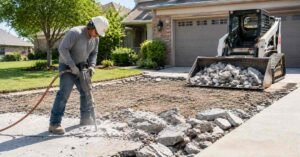
A concrete driveway can look dramatically different after the right repair work, but the finished appearance is only one part of the process. A proper concrete driveway repair before and after the project starts with identifying why the surface failed, determining whether repair is practical, and choosing the right treatment for the damage.
For homeowners in Santa Fe, TX, the process may involve repairing cracks, correcting surface deterioration, improving drainage, or removing sections that are too damaged to restore. Mouton Concrete Services has more than 40 years of hands-on experience in concrete work, including driveway repair, maintenance, demolition, and replacement.
How Does a Driveway Inspection Determine the Right Repair?
Before any repair begins, the driveway should be inspected carefully. The goal is to determine whether the visible damage is only on the surface or whether deeper problems are affecting the slab.
A professional assessment may look at:
- Crack size, depth, and location
- Spalling, chips, and surface wear
- Uneven or sunken sections
- Water pooling and drainage
- The condition around driveway edges
- Whether the underlying base appears unstable
This step helps separate a simple concrete driveway crack repair from a project that may require partial removal or replacement. Treating the visible crack without addressing the reason it developed can lead to recurring damage.
The existing weather-related driveway repair guide also explains how temperature changes, moisture, standing water, and other environmental conditions can contribute to concrete deterioration.
What Happens Before the Concrete Repair Starts?
Once the damage has been assessed, the repair area needs to be prepared. Good preparation is important because new repair material needs a clean and stable surface to bond correctly.
Depending on the condition of the driveway, preparation may include cleaning the damaged area, removing loose concrete, opening cracks for treatment, or preparing sections that need more extensive work.
For deeper deterioration, the repair process can become more involved. Severely damaged sections may need to be removed before a new surface can be installed. This is where damaged concrete driveway repair differs from basic crack filling.
The team also considers access to the driveway, nearby structures, landscaping, drainage patterns, and the amount of concrete that needs attention.
Which Repair Method Creates the Best Before-and-After Improvement?
The appropriate method depends on the type and severity of the damage. Not every driveway needs complete replacement, and not every crack can be solved with a simple patch.
Minor Cracks and Surface Damage
Small cracks and limited surface deterioration may be suitable for targeted repair. The damaged material is cleaned and prepared before the appropriate repair compound or treatment is applied.
The goal is to stop the damaged area from worsening while improving the overall appearance of the driveway.
Widespread Surface Wear
When the slab remains structurally sound but the surface has become worn, resurfacing may provide a more extensive visual improvement. Driveway resurfacing services can refresh an aging surface without automatically requiring complete removal.
Severe Structural Damage
Large cracks, major sinking, widespread deterioration, or unstable sections can indicate that repair alone may not be enough. In these situations, removal and replacement may provide a more dependable long-term solution.
When repair is no longer enough, explore demolition, haul-off, and driveway replacement as the next step.
What Should You Expect From the Actual Repair Process?
A professional repair project should follow a logical sequence rather than simply covering visible defects. While the exact work varies by driveway condition, the process generally includes these steps:
- Site assessment: The damaged areas are examined to identify the scope of work.
- Surface preparation: Loose, weak, or damaged material is removed.
- Crack or damage treatment: Appropriate repair work is completed based on the condition.
- Surface finishing: The repaired areas are finished to create a more consistent appearance.
- Cleanup: Debris and construction materials are removed from the work area.
- Final inspection: The completed driveway is checked for visible issues and overall finish.
This hands-on process is important because appearance alone does not tell you whether a driveway has been properly repaired.
What Changes Should You Notice in the Before-and-After Results?
The most noticeable driveway repair before and after results usually involve fewer visible cracks, a cleaner surface, improved uniformity, and a more finished appearance.
However, homeowners should understand that repaired concrete does not always look identical to brand-new concrete. Existing concrete can have years of weather exposure, fading, stains, and color variation.
A successful driveway surface improvement should focus on addressing the actual damage while producing a practical and visually consistent result. The final appearance depends on the existing slab, repair method, age of the concrete, and extent of deterioration.
For homeowners comparing options, photographs can be helpful, but an on-site assessment gives a much better understanding of what can realistically be achieved.
How Can Santa Fe, TX Homeowners Protect the Repaired Driveway?
Repair is only one part of keeping concrete in good condition. After the work is complete, homeowners should watch for standing water, new cracks, surface flaking, and areas that begin to settle.
Regular cleaning can help keep the surface free of materials that contribute to staining and deterioration. It is also useful to address small problems before they become larger repairs.
Mouton Concrete Services serves Santa Fe and surrounding communities within its stated service area. The company lists regular working hours of Monday through Friday from 8:00 AM to 5:00 PM and Saturday through Sunday from 9:00 AM to 5:00 PM.
The business is based at 6803 Avenue F, Santa Fe, TX 77510. For project inquiries, call (409) 692-1638 to discuss your driveway and request an estimate.
When Should You Choose Repair Instead of Complete Replacement?
Repair generally makes more sense when the existing concrete is still sufficiently sound and the damage is limited to specific areas. Replacement becomes more appropriate when deterioration is widespread or the slab has significant structural problems.
Consider professional evaluation when you notice:
- Cracks that continue to expand
- Sections that are sinking or becoming uneven
- Large areas of spalling
- Repeated repairs in the same locations
- Water collecting around damaged sections
- Damage that affects vehicle access or safety
A professional can determine whether targeted repair, resurfacing, partial replacement, or complete replacement is the most sensible option.
What Makes the Final Result Worth the Repair Work?
The best results come from matching the repair method to the actual condition of the driveway. Simply making cracks less visible may provide a short-term cosmetic improvement, but identifying the cause of the damage can help produce a more useful long-term solution.
For Santa Fe homeowners, the goal should be a driveway that looks cleaner, functions properly, and has damage addressed before it becomes more extensive.
When you want an experienced team to assess your options, Mouton Concrete Services brings more than 40 years of hands-on concrete experience to driveway repair, maintenance, demolition, and replacement projects.
Frequently Asked Questions
How much does concrete driveway repair cost?
The cost depends on the size of the driveway, type of damage, amount of preparation required, and whether the work involves localized repair, resurfacing, partial replacement, or complete replacement. An on-site assessment is the best way to determine the scope of work and develop an appropriate project estimate.
How long does a driveway repair project take?
Project timing varies according to the driveway’s size, damage level, repair method, preparation requirements, and weather conditions. Small repairs can be much quicker than projects involving extensive surface preparation or replacement. A contractor should explain the expected schedule after evaluating the actual condition of the driveway.
Does driveway repair include cleanup?
A professional project should account for cleanup as part of the work process. Depending on the repair method, this can involve removing loose concrete, construction debris, and other materials from the work area. Larger demolition projects may require additional haul-off work before the driveway area is ready for its next stage.
Can severely cracked concrete be repaired?
Sometimes, severe cracking can indicate deeper problems. If a slab has significant movement, sinking, widespread deterioration, or unstable sections, filling individual cracks may not provide a durable solution. A professional inspection can determine whether localized repair is reasonable or whether partial or complete replacement would be more appropriate.
Does Mouton Concrete Services handle driveway replacement?
Yes. Mouton Concrete Services provides concrete driveway repair and also handles full driveway replacement when existing concrete is too damaged to restore effectively. Replacement can include demolition and haul-off of old concrete before the new driveway work begins, depending on the project’s requirements.
Does driveway repair help improve curb appeal?
Yes. Repairing cracks, damaged areas, surface deterioration, and uneven sections can make an older driveway look cleaner and better maintained. The final visual improvement depends on the existing concrete and the selected repair method. Resurfacing or replacement may create a more substantial appearance change when deterioration is widespread.
What should I do if my driveway damage seems urgent?
If a driveway develops a rapidly expanding crack, major sinking, a hazardous uneven section, or another condition that affects safe use, arrange a professional assessment promptly. Avoid assuming that a visible patch will solve the underlying problem. Early evaluation can help determine the safest and most practical repair approach.