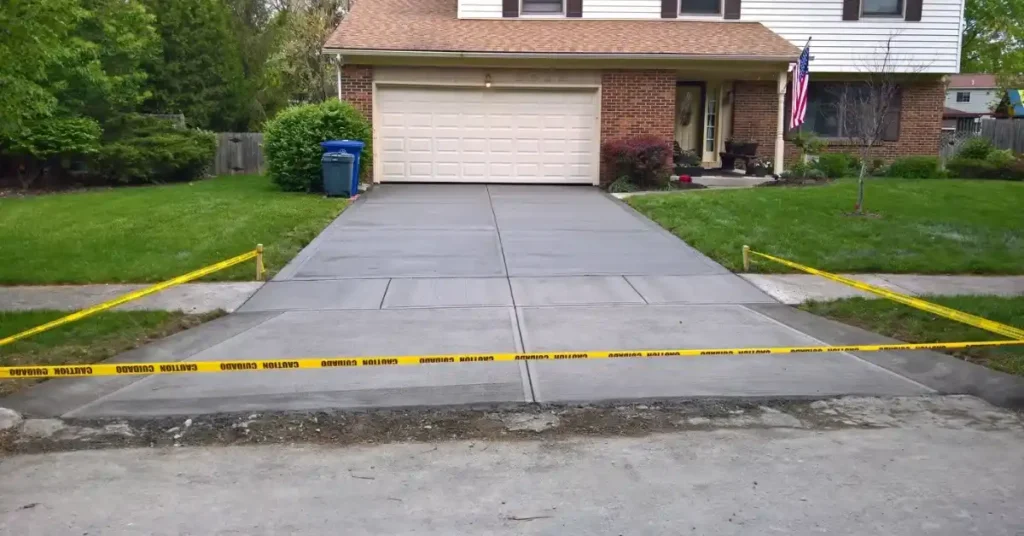
Driveway length is not just a design choice. In Galveston, TX, it directly affects construction cost, drainage performance, long-term durability, and how well the driveway handles coastal soil conditions.
Most homeowners focus on appearance or standard sizes, but incorrect driveway dimensions can lead to cracking, drainage problems, and expensive replacement.
If you are planning a concrete driveway in Galveston, professional planning is essential for long-term performance.
Why Driveway Length Matters in Galveston
In most cities, driveway length is mainly about parking space. In Galveston, it also involves structural engineering due to coastal soil and weather conditions.
Key environmental factors include:
- Sandy and unstable soil conditions
- Heavy rainfall and storm drainage pressure
- Salt air exposure from the Gulf
- Foundation movement over time
Without proper design, these factors can shorten the lifespan of any concrete driveway.
Standard Driveway Sizes vs Real Conditions
Common standard measurements include:
- Single-car driveway: 18 to 24 feet long
- Two-car driveway: 25 to 40 feet long
- Larger properties: 40+ feet depending on layout
However, in Galveston, these are only baseline measurements. Adjustments are often required based on:
- Property slope and elevation
- Drainage direction
- Soil stability
- Vehicle type and usage
How Driveway Length Impacts Cost
Driveway cost increases with length, but not only due to materials. In coastal areas like Galveston, additional costs come from:
- Excavation in unstable soil
- Base preparation and compaction
- Concrete reinforcement requirements
- Drainage correction systems
Proper installation reduces long-term repair costs significantly.
Soil Conditions Matter More Than Length
The most critical factor in Galveston driveway construction is not size, but soil behavior.
The ground in this region is often sandy and shifts under pressure. Without proper preparation, even a perfectly sized driveway will fail early.
Proper installation includes:
- Compacted subgrade preparation
- Stabilized base layer installation
- Correct slope for water drainage
Driveway Length and Home Value
A well-designed driveway improves curb appeal and usability, which can positively influence property value.
However, buyers respond more to quality and condition than size alone.
Cracked or poorly built long driveways reduce perceived value, while properly built driveways enhance it significantly.
When You Should Extend or Replace a Driveway
You may need an upgrade if you notice:
- Limited parking space
- Water pooling near the garage
- Repeated cracking or sinking
- Difficult vehicle movement or tight turns
These issues often indicate structural or drainage problems.
Professional Installation Makes the Difference
Driveway performance depends more on construction quality than on dimensions.
Key factors include:
- Proper base engineering
- High-strength concrete mix
- Reinforcement placement
- Drainage design
At Mouton Concrete Services, driveways are built specifically for Galveston’s coastal conditions.
Frequently Asked Questions
What is the average driveway length in Galveston TX?
Most driveways range from 18 to 40 feet depending on vehicle needs and property layout.
Does driveway length affect property value?
Yes, but only when combined with proper construction quality and drainage performance.
What is more important than driveway size?
Soil preparation, base stability, and drainage design are more important than dimensions.
Get Professional Driveway Installation in Galveston TX
If you are planning a new driveway or need an evaluation of an existing one, proper engineering is critical in coastal conditions.
Mouton Concrete Services provides concrete driveway installation, replacement, and repair designed for long-term durability in Galveston, TX.
Call (409) 692-1638 to schedule a free estimate.