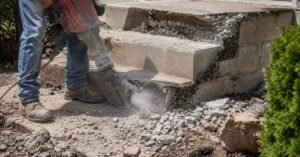
A driveway can look excellent when it is first installed, but its long-term performance depends heavily on the quality of preparation and installation. Proper grading, a stable base, suitable reinforcement, drainage, control joints, and correct curing all help reduce premature cracking and settlement in cement driveways.
For homeowners in Santa Fe, TX, installation quality matters because driveways deal with daily vehicle loads, moisture, changing weather, and natural ground movement. A properly planned installation can help protect your investment and reduce the need for frequent repairs.
Why Does Proper Installation Make Cement Driveways Last Longer?
Proper installation creates a stable structure from the ground up. Instead of relying only on the concrete slab, a professional installation considers the soil, base, drainage, reinforcement, thickness, joints, finishing, and curing process.
A strong foundation helps distribute vehicle loads and reduces uneven movement beneath the surface. When these steps are completed correctly, cement driveways have a better chance of maintaining their strength and appearance over time.
One important part of preparation is creating a stable foundation before concrete is poured. For homeowners planning a new project, professional driveway guidance from Mouton Concrete Services can also help with decisions related to finishes, maintenance, and long-term performance.
What Installation Steps Protect a Driveway From Early Damage?
A durable driveway starts long before the concrete truck arrives. The installation process should address the conditions beneath the slab and the loads it will experience.
How Does Soil Preparation Affect Driveway Durability?
Loose or poorly prepared soil can shift after installation. When the ground moves unevenly, the concrete above it may crack, sink, or become uneven.
Proper excavation removes unsuitable material where necessary. The remaining soil should then be graded and compacted to create a more stable foundation.
A properly prepared base also helps distribute weight more evenly. This is especially important when the driveway will regularly support multiple vehicles or heavier loads.
Why Is the Base Layer So Important?
The base provides additional support between the prepared soil and concrete slab. It can help create a more consistent foundation and reduce problems caused by weak or unstable ground.
The base material should be placed at the appropriate depth and compacted correctly. Simply spreading material across the surface without proper preparation can leave weak areas underneath the finished driveway.
How Should Driveway Thickness Be Selected?
Not every driveway experiences the same traffic. A surface used mainly by passenger vehicles has different requirements from one that regularly supports trucks, trailers, or recreational vehicles.
The planned slab thickness should reflect expected loads and site conditions. Selecting an appropriate design before pouring can help reduce unnecessary structural stress later.
Does Reinforcement Help Prevent Driveway Problems?
Reinforcement can help concrete handle tensile stresses and improve the structural performance of the slab. Rebar or other reinforcement may be selected according to the project’s design and site requirements.
Reinforcement does not make concrete completely crack proof. However, proper placement can help the slab better manage stresses caused by traffic, temperature changes, and normal movement.
How Do Drainage and Control Joints Protect the Slab?
Water management and crack control are two installation details that can have a major effect on long-term performance.
Drainage should guide water away from areas where it could collect beneath or alongside the driveway. Poor drainage can contribute to erosion, soft spots, settlement, and repeated surface problems.
Control joints are also important. Concrete naturally shrinks as it cures and can move with temperature changes. Properly planned joints create controlled locations where movement-related cracking is more likely to occur.
For Santa Fe homeowners considering a new installation, Mouton Concrete Services’ driveway contractor page provides information about driveway installation, repair, replacement, reinforcement, and related services.
Proper drainage is particularly valuable because standing water can create problems beneath and around the slab. When moisture management is considered during installation, cement driveways can better withstand common environmental stresses.
Why Does Concrete Curing Matter After the Pour?
Pouring and finishing are not the end of the installation. Concrete needs appropriate curing conditions so it can develop strength properly.
Premature drying can affect the surface and increase the risk of shrinkage related problems. Professional crews should account for weather conditions and use suitable curing practices rather than treating every pour exactly the same way.
A basic installation process should include:
- Preparing and grading the site.
- Compacting the subgrade and base.
- Installing forms and reinforcement.
- Pouring and consolidating the concrete.
- Finishing the surface at the appropriate stage.
- Installing or cutting planned control joints.
- Protecting the slab during curing.
- Allowing adequate time before regular heavy use.
Following these steps helps reduce avoidable installation problems and gives the finished surface a better chance of performing as intended.
What Installation Mistakes Can Shorten Driveway Life?
Even quality concrete can perform poorly when installation is rushed or important details are skipped.
Common problems include:
- Pouring over unstable or poorly compacted soil
- Ignoring drainage and water movement
- Using an unsuitable slab thickness
- Poorly positioned reinforcement
- Incorrectly spaced control joints
- Finishing the surface at the wrong time
- Allowing the slab to dry too quickly
- Opening the driveway to heavy traffic too soon
These mistakes can contribute to cracking, settlement, scaling, uneven surfaces, and premature deterioration.
Professional installation is therefore about more than creating a smooth looking surface. It is about building a complete system that works together from the soil upward.
When Should You Repair Instead of Replace a Driveway?
Proper installation can extend service life, but existing concrete may eventually require attention. The right solution depends on the severity and cause of the damage.
Minor, localized problems may sometimes be suitable for concrete driveway repair, particularly when the underlying slab remains structurally sound. Widespread cracking, major settlement, severe deterioration, or repeated repair failures may point toward concrete driveway replacement.
A professional assessment should consider:
- The depth and pattern of cracks
- Whether sections have settled
- Drainage problems
- The condition of the base
- Surface deterioration
- The overall age and structural condition of the slab
Repairing a symptom without correcting an underlying drainage or foundation problem may only provide a temporary solution.
Plan Your Driveway Installation when you need a properly prepared, reinforced, and professionally installed concrete surface.
How Can Santa Fe Homeowners Protect Their Driveway Investment?
Good installation is the foundation, but reasonable care after installation also matters. Keep the surface clean, address visible damage early, avoid unnecessary chemical exposure, and monitor areas where water tends to collect.
Santa Fe homeowners can also benefit from choosing a contractor familiar with the surrounding Galveston County area. Mouton Concrete Services lists Santa Fe, League City, Texas City, La Marque, Friendswood, Galveston, and other nearby communities among its service areas.
For local service, the business lists regular hours of Monday through Friday, 8:00 AM–5:00 PM, and Saturday and Sunday, 9:00 AM–5:00 PM. Call (409) 692-1638 to get a same-day quote. The listed business address is 6803 Avenue F, Santa Fe, TX 77510.
What Makes a Proper Installation Worth the Investment?
The biggest advantage of proper installation is that it addresses potential problems before they become expensive repairs. A well-prepared base, appropriate reinforcement, controlled drainage, suitable thickness, carefully placed joints, and proper curing all contribute to better long-term performance.
While no concrete surface is completely immune to cracking or weather related wear, careful installation can reduce avoidable failures and help the driveway perform reliably for many years.
When homeowners compare driveway paving services, they should look beyond the finished appearance and ask how the contractor handles preparation, reinforcement, drainage, curing, and site specific conditions.
Can Proper Installation Really Extend Driveway Life?
Yes. Proper installation can improve driveway durability by creating a stable base, controlling water, supporting expected vehicle loads, managing concrete movement, and allowing the slab to cure correctly.
The goal is not simply to pour a slab. It is to build a driveway system that works with the property rather than fighting against soil movement, water, weather, and traffic.
For homeowners in Santa Fe, cement driveways installed with careful planning and proper construction methods can provide dependable performance while reducing avoidable maintenance and repair concerns. Mouton Concrete Services can be considered when planning a local driveway project.
Frequently Asked Questions
How much does a properly installed concrete driveway cost?
The final cost depends on driveway size, thickness, site preparation, base requirements, reinforcement, finish, demolition needs, drainage, and other project conditions. A detailed estimate is more useful than relying on a general price per square foot because every property has different preparation and installation requirements.
How long does driveway installation usually take?
The timeline depends on project size, weather, site conditions, preparation requirements, and curing considerations. Mouton’s driveway service page states that a typical installation takes about 3 to 7 days. The actual schedule should be confirmed after the property has been evaluated.
Does Mouton Concrete Services serve areas outside Santa Fe?
Yes. The company lists Santa Fe along with communities including League City, Texas City, La Marque, Friendswood, Galveston, Alvin, Pearland, Dickinson, Kemah, and Bacliff among its service areas. Availability for a specific property should be confirmed when requesting an estimate.
What is included in a professional driveway installation?
A complete project can include site evaluation, excavation, grading, base preparation, compaction, forms, reinforcement, concrete placement, finishing, control joints, curing, and cleanup. The exact scope depends on the property and project design. Homeowners should confirm these details before work begins.
Can an old driveway be repaired instead of replaced?
Sometimes. Repair may make sense when damage is limited and the underlying slab remains structurally sound. Extensive cracking, major settlement, severe deterioration, or repeated failures may make replacement more practical. A contractor should inspect the existing driveway and identify the underlying cause before recommending either option.
Can urgent driveway problems be handled quickly?
Urgent situations vary by project and contractor availability. Cracked or settled concrete can create trip hazards or drainage concerns, so homeowners should contact a professional promptly rather than allowing damage to worsen. Emergency or same-day availability should always be confirmed directly.
Why choose Mouton Concrete Services for driveway work?
Mouton Concrete Services provides driveway installation, repair, resurfacing, replacement, reinforcement, and custom finish options, with Santa Fe included among its listed service areas. Homeowners should discuss their specific soil, drainage, traffic, thickness, and reinforcement requirements before work begins.