Every homeowner hits that moment. You pull into the garage, glance down, and notice a crack that definitely was not there last spring. Suddenly you are wondering whether to repair or replace concrete driveway slabs before things get worse. The answer depends on age, damage type, and budget, and getting it right can save you thousands. Many homeowners start by exploring Driveway Repair and Replacement in Pasadena, TX to understand their options before making a final call.
Understanding Concrete Driveway Damage
Concrete is tough, but it is not invincible. Heat, heavy vehicles, shifting soil, and water all chip away at it over time. Here in the Gulf Coast region, clay soils expand when wet and shrink when dry, which puts steady stress on any slab.
Surface Level Problems
Surface problems include hairline cracks, light scaling, discoloration, and small chips. These issues look ugly but usually do not affect the structure underneath. A neighbor of mine spent weeks stressing over a web of tiny cracks, only to learn a simple sealing job would handle it for a fraction of what he feared.
Structural Problems
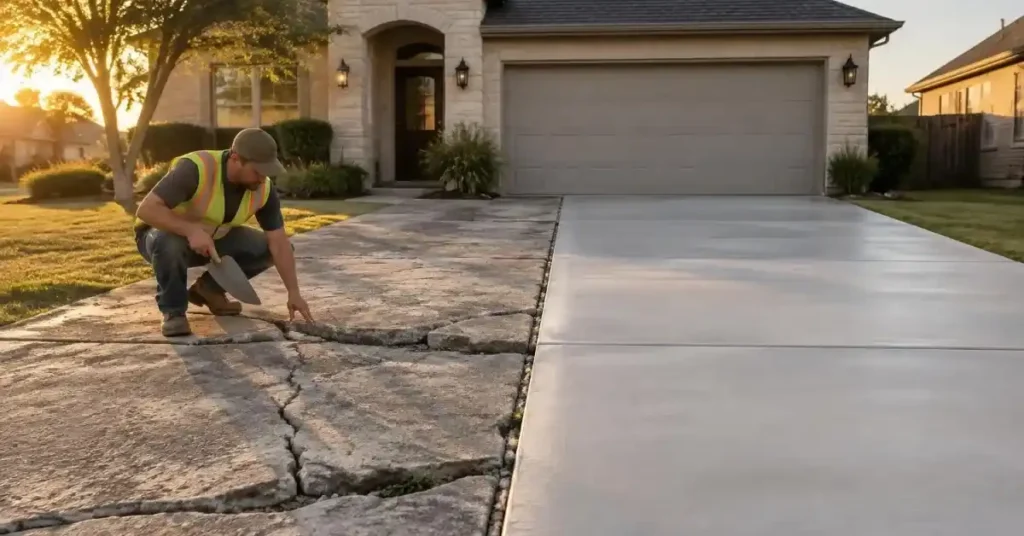
Structural damage is a different story. Wide cracks, sunken sections, heaving, and crumbling edges often mean the base beneath has failed. When the foundation goes, patching the top rarely holds for long. Knowing which category your damage falls into is the first step when you decide to repair or replace concrete driveway surfaces.
Signs You Can Fix Your Concrete Driveway
Plenty of concrete driveway issues can be handled without tearing everything out. If the slab is fairly young and mostly level, fixing it is often the smart, budget friendly move.
Small Cracks and Minor Wear
Cracks narrower than about a quarter inch can typically be filled with a flexible crack sealant. Light surface scaling can be treated with resurfacing, which adds a thin new layer over the old concrete.
Good Signs to Look For
You are likely a good candidate for fixing if you notice:
- Cracks under a quarter inch wide
- Minor surface flaking or spalling
- Slight sinking in one small area that can be lifted with slabjacking
- A concrete driveway younger than 15 years
When these signs line up, choosing to repair or replace concrete driveway sections leans heavily toward fixing.
Signs It Is Time to Replace
Sometimes patching is like putting a bandage on a broken leg. If your concrete driveway shows widespread damage, full replacement makes more sense over the long run.
Age and Lifespan
A well built concrete driveway generally lasts 25 to 30 years, according to estimates from HomeAdvisor and Angi. Once yours passes that range and starts showing heavy wear, investing in new concrete is usually wiser than chasing endless fixes.
Serious Structural Damage
Watch for these red flags:
- Large, deep cracks that keep spreading
- Multiple sunken or heaved slabs
- Standing water and poor drainage
- Crumbling edges and exposed aggregate across large areas
- Damage covering more than about half the surface
If several of these appear together, the repair or replace concrete driveway decision almost always points toward replacement.
Cost Comparison: Fixing vs Replacing
Money matters, so let us talk real numbers. Prices vary by region, access, and slab size, but national averages give a helpful starting point.
Typical Fixing Costs
Based on figures published by Angi and HomeAdvisor, crack filling often runs a few hundred dollars. Resurfacing typically costs around 3 to 7 dollars per square foot, and slabjacking for sunken sections usually lands between 500 and 1,500 dollars depending on size.
Typical Replacement Costs
A brand new concrete driveway usually runs about 6 to 15 dollars per square foot, including removal of the old slab. For an average two car concrete driveway, that often totals somewhere between 4,000 and 12,000 dollars.
Weighing Long Term Value
Fixing costs less upfront, but repeated fixes add up. Replacement costs more today, yet it resets the clock for decades. When you repair or replace concrete driveway surfaces, think about how long you plan to stay in your home.
Expert Tips for Making the Right Choice
Even with all the facts, the choice can still feel tricky. A few practical steps make it much easier.
Get a Professional Inspection
An experienced contractor can spot base failure, drainage trouble, and root intrusion that most people miss. Ask for a written assessment and compare at least two quotes.
Consider Curb Appeal and Resale
A fresh concrete driveway boosts curb appeal instantly. If you plan to sell soon, replacement may pay for itself through a stronger first impression with buyers.
Maintenance Habits That Extend Lifespan
Whatever you choose, these habits help your concrete driveway last:
- Seal the surface every two to three years
- Fill small cracks quickly before water gets in
- Keep heavy equipment and large trucks off when possible
- Clean oil stains promptly
- Make sure gutters drain away from the slab
Good care makes the repair or replace concrete driveway question come up far less often.
FAQs
How do I know whether to repair or replace concrete driveway damage?
Look at crack width, how level the slab is, and how old it is. Minor cracks on a younger slab can usually be fixed, while widespread structural damage on an older slab calls for replacement.
How long does a concrete driveway last?
Most last 25 to 30 years with proper sealing and regular maintenance.
Is resurfacing a good alternative to replacement?
Yes, as long as the base is solid. Resurfacing refreshes the look and covers minor wear, but it will not fix structural failure underneath.
How much does concrete driveway replacement cost?
National averages range from roughly 6 to 15 dollars per square foot, depending on size, location, and finish.
Can sunken concrete driveway slabs be lifted?
Often, yes. Slabjacking or foam leveling can raise sunken sections, saving you from full replacement when the concrete itself is still in good shape.
Conclusion
Deciding to repair or replace concrete driveway surfaces comes down to the damage you see, how old the slab is, and your long term plans. Small cracks and light wear usually call for a simple fix, while deep structural trouble points to a fresh start. Either way, acting early protects your property and your wallet. Ready to stop guessing and get a clear answer? Talk to Mouton Concrete Services About Your Project today and get honest, expert guidance on the best path for your home.